You can travel around Georgia without renting a car. Quite a lot of the country is accessible by train, bus or marshrutka, and for a trip built around Tbilisi, Batumi, Kutaisi and a few popular side trips, a car may be unnecessary.
The limitation appears when you leave the main transport corridors. Getting from one city to another is usually the easy part. Reaching remote monasteries, wineries, mountain villages or several scattered sights in the same day is where public transport becomes much less practical.
So the useful question is not simply “Can you travel around Georgia without a car?” It is: what kind of Georgia trip are you planning?
← Back to the Georgia Travel Guide
The short answer
Travelling without a car is easy if your itinerary is centred on major cities and well-connected destinations.
It is possible but less flexible for places such as Kazbegi and Kakheti, where public transport gets you into the region but does not necessarily take you where you want to go once you are there.
A car, private driver or tour becomes much more useful when you want to visit several wineries, villages, monasteries or natural sights in one day.
In Georgia, the biggest advantage of a car is often not the journey between major cities. It is the last 20–50 kilometres and the freedom to stop along the way.
Train, bus or marshrutka?
Train
For longer journeys between major cities, the train is often the first option worth checking. Georgian Railway connects Tbilisi with destinations including Batumi, Zugdidi, Poti and Borjomi. Where the railway fits your route, it is generally more predictable and comfortable than a marshrutka, especially with luggage.
Intercity bus
Buses fill some gaps in the rail network and connect major cities and transport hubs. They are particularly useful for routes involving Tbilisi, Kutaisi, Batumi and Kutaisi International Airport.
Marshrutka
Marshrutkas — shared minibuses — cover a much larger network of towns and regional destinations. They are inexpensive and extremely useful, but less predictable than trains. Departure points vary, luggage space can be limited, and some services are less rigidly scheduled.
Where travelling without a car is easy
Tbilisi
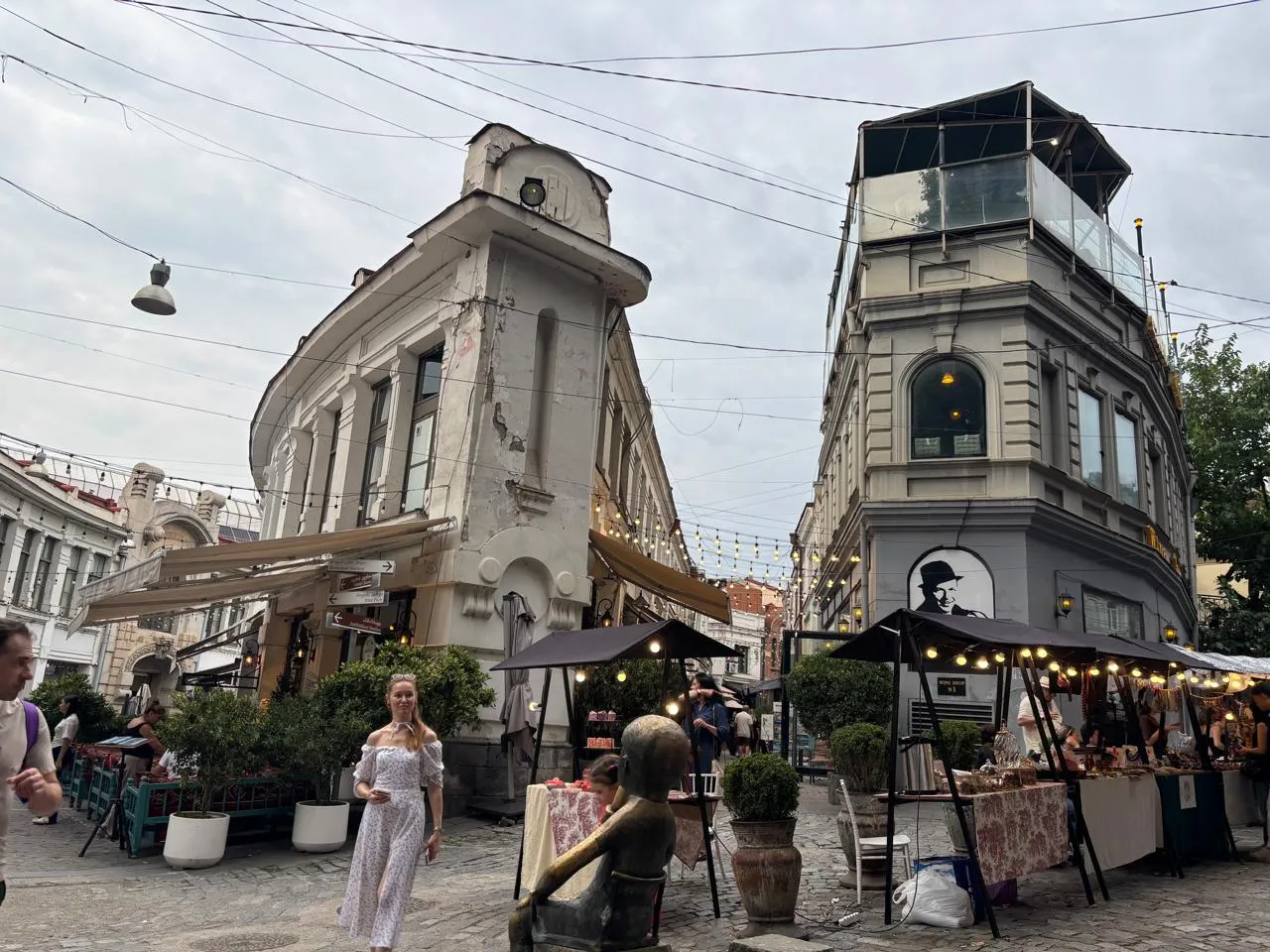
You do not need a car to explore Tbilisi. Metro, buses, taxis and walking cover most visitor needs, and driving in central areas can create more inconvenience than it solves. Tbilisi is also Georgia’s main transport hub, so it works naturally as the starting point for many car-free trips.
Batumi
Batumi is one of the easiest major destinations to include without a car. Direct trains run from Tbilisi, and once in Batumi much of the city visitors are interested in is compact enough to explore without driving.
If your itinerary is simply Tbilisi → Batumi → Tbilisi, there is little reason to rent a car purely for that journey.
Kutaisi
Kutaisi also works well without your own vehicle. The city is connected by buses, marshrutkas and other intercity services, while Kutaisi Airport has dedicated transport connections.
The important distinction is between reaching Kutaisi and exploring everything around Kutaisi. If you want to combine several caves, monasteries or natural attractions outside the city in one day, a taxi, driver or organised trip can become much more efficient.
Mtskheta
Mtskheta is close enough to Tbilisi to be one of the simplest independent trips without a car. Getting to the town is easy; combining it with several surrounding sights is less convenient.
Gori
Gori is another realistic destination without a car. Public transport gets you to the city, and central Gori is compact enough to explore independently.
Borjomi
Borjomi can also fit into a car-free itinerary. Rail and road connections give travellers practical ways to move between Tbilisi and Borjomi without driving.
Where travelling without a car requires compromises
Kazbegi
You can reach Stepantsminda by marshrutka from Tbilisi, so saying that you need a car to visit Kazbegi would be misleading.
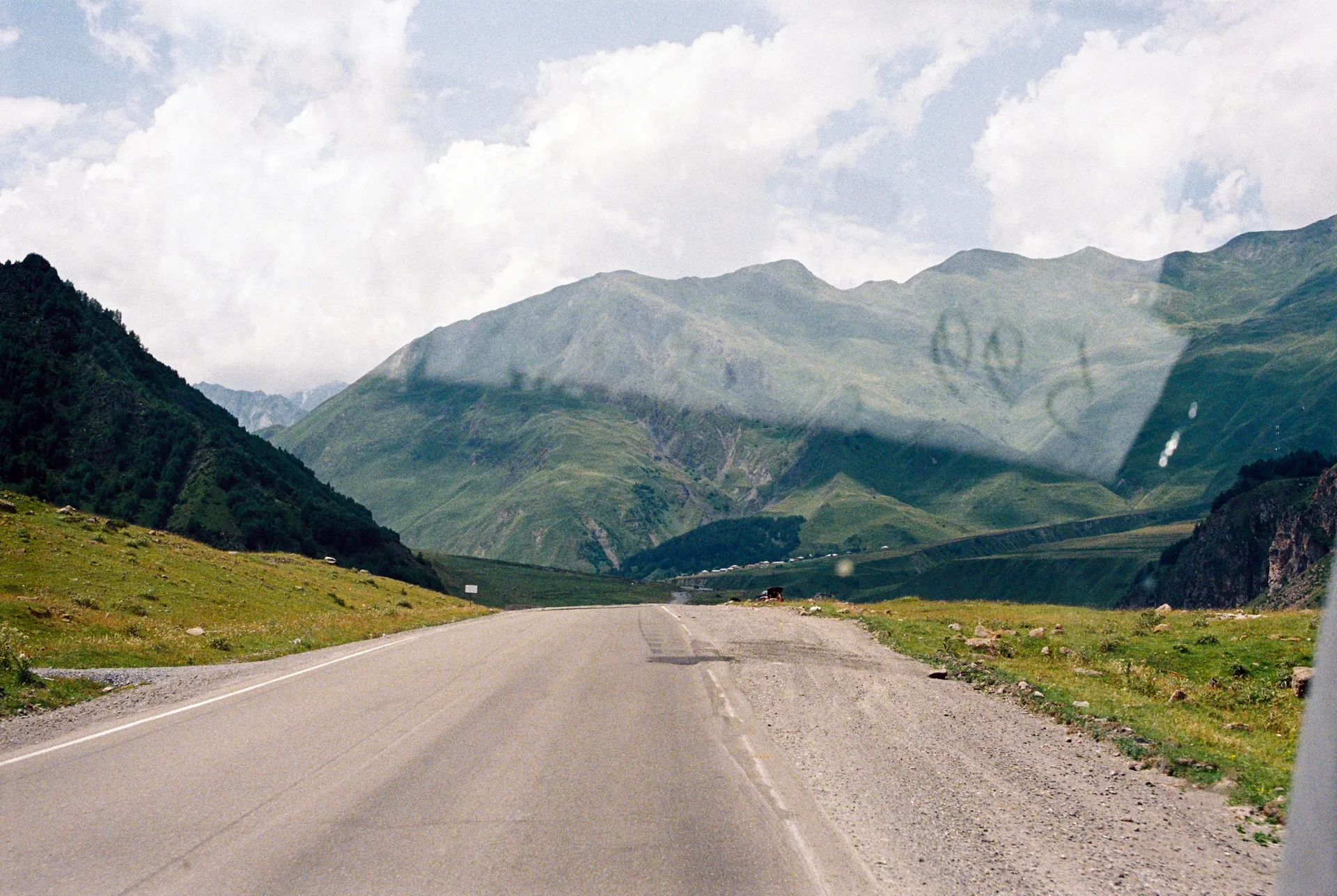
But there is a significant difference between getting to Stepantsminda and experiencing the Georgian Military Highway along the way. A normal marshrutka solves Tbilisi → Stepantsminda. It does not give you control over stops at Ananuri, Zhinvali Reservoir, Gudauri and viewpoints whenever you want them.
If your priority is simply reaching Kazbegi cheaply, the marshrutka is reasonable. If the road itself is part of the trip, a driver or organised tour offers much more flexibility.
Kakheti
Kakheti is probably the clearest example of why “public transport exists” does not necessarily mean “public transport works well for sightseeing.”
Marshrutkas connect Tbilisi with Telavi, Sighnaghi and other towns. The difficulty appears when your plan is winery → monastery → village → another winery → Telavi or Sighnaghi.
Want to leave the transport logistics to someone else?
For a winery-heavy Kakheti day, private transport can be more practical than trying to connect several rural stops by marshrutka.
We may earn a commission at no extra cost to you.
The real limitation is not always comfort
It is easy to focus on whether marshrutkas are comfortable. For trip planning, the bigger issue is often control over your time.
Tbilisi does not have one central station from which every marshrutka leaves. A journey can involve getting to the correct station, finding the right vehicle, waiting for departure, dealing with luggage, and arranging the final leg at your destination.
For one transfer, none of this is particularly difficult. Repeat it several times during a short trip and public transport can start consuming a noticeable amount of your holiday.
When the train is the better choice
Whenever a convenient direct train exists between two places on your itinerary, check it before looking at marshrutkas. For longer routes such as Tbilisi–Batumi, scheduled departures, more space and easier travel with luggage are meaningful advantages.
But Georgia’s railway network does not cover every major tourist region. Treat the train as the backbone of certain journeys, not as a complete transport system.
When a marshrutka makes sense
Marshrutkas work particularly well when you need to travel from one town to another, you are reasonably flexible about timing, you do not have excessive luggage and you do not need sightseeing stops along the way.
When paying for a driver or tour makes sense
Travelling without a rental car does not mean using public transport for every kilometre. Use cheap, efficient public transport where it works and pay for private transport only on the days when it materially improves the trip.
That might mean a winery day in Kakheti, a Georgian Military Highway trip with several stops, several remote sights around the same region, or a destination where the final leg has poor public transport.
Who can comfortably travel Georgia without a car?
A car-free trip is particularly practical if you travel solo or as a couple, stay several nights in each main destination, prefer trains to frequent road transfers, are comfortable using occasional taxis and do not need to visit four or five places every day.
A car becomes more valuable if you travel with children or a larger group, carry a lot of luggage, change accommodation frequently, want spontaneous stops or plan substantial time in rural and mountain areas.
What can a realistic car-free Georgia itinerary look like?
Tbilisi — 3–4 nights. Explore the city without a car and make an independent trip to Mtskheta.
Kazbegi — 1–2 nights. Travel from Tbilisi by marshrutka, or use organised transport if you want sightseeing stops along the Military Highway.
Batumi — 3 nights. Take a direct train from Tbilisi.
Kutaisi — 2 nights. Continue by intercity transport and use local taxis or a day trip where necessary.
Kakheti can be added either as an independent stay in Telavi or Sighnaghi, or as a day with a driver if wineries and multiple stops are the priority.
Before each journey, check these six things
- Exactly where the vehicle departs from.
- Whether there is a fixed timetable.
- Whether tickets can or should be bought in advance.
- How luggage is handled.
- When the last practical return service leaves.
- How you will get from the final stop to your accommodation.
For trains, check the current Georgian Railway timetable before booking rather than relying on an old travel article. Timings can change.
Bottom line
Yes, you can travel around Georgia without a car.
Tbilisi, Batumi, Kutaisi and several popular destinations are realistic using trains, buses and marshrutkas. The limitations become more noticeable when you leave major transport corridors or want to connect several scattered sights in a single day.
Public transport is good at answering “How do I get from town A to town B?” A car or private driver is better at answering “How do I visit these particular places, in this order, on my schedule?”
For many travellers, the most efficient solution is a mixed approach: trains for long journeys, buses or marshrutkas for straightforward transfers, local taxis where needed, and a driver only for the days when the extra flexibility is genuinely useful.
Explore more in Georgia
Continue with practical guides for choosing how to move around Georgia.